SparkPost Alternative (2026): Flat HTTP Email + Mailboxes Without Transmissions Nesting
Comparing SparkPost/Bird Transmissions nesting and omnichannel accounts with Rovela’s flat POST /emails, Idempotency-Key, domain mailboxes, and inbound—when to keep high-volume SparkPost and when to simplify SaaS OTP.
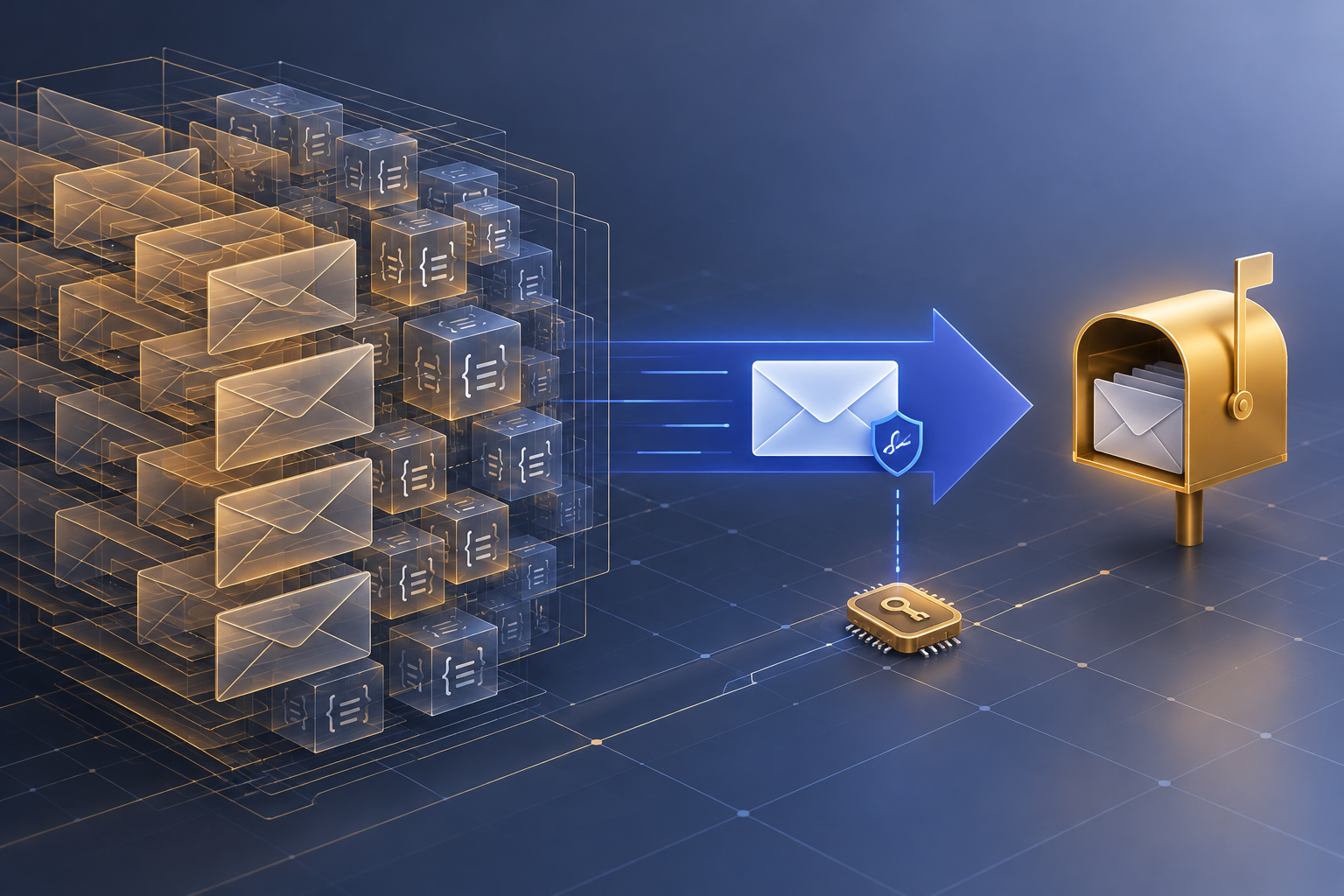
Why people search for a SparkPost alternative
SparkPost built a reputation as a high-volume, deliverability-first ESP. In recent years the product story has also been framed under Bird (Bird Email), with SparkPost still in the heritage and API folklore many teams search for. Engineers who type "SparkPost alternative" in 2026 are rarely saying "SparkPost cannot deliver." They are usually saying one of these:
- The Transmissions API shape—nested
recipients/content/optionsenvelopes—is heavier than a SaaS that mostly sends OTP, magic links, receipts, and invites. - The account now sits inside a broader omnichannel story (email plus other channels). That is valuable for enterprises that already buy SMS and WhatsApp; it is friction for a product team that only wants verified-domain transactional email.
- Docs, SDKs, and dashboard mental models still mix SparkPost and Bird naming. Migration planning gets noisy when procurement says one brand and the code still calls another.
- You want human mailboxes (
hello@,support@) and inbound on the same organization as the send API—not a second mailbox vendor next to a send-only transmissions stack. - Side projects, staging orgs, and AI-agent prototypes need a permanent Free quota with real delivery—not only a high-volume paid curve optimized for millions of messages.
None of that claims SparkPost (or Bird Email) is weak at scale. It claims the search intent is often flat HTTP transactional send, mailboxes beside the API, and a smaller surface for OTP-shaped traffic. There is no dedicated /alternatives/sparkpost marketing page on Rovela as of this writing—this post is the engineering long-tail. Peers in other keyword classes (do not confuse the hooks): SendGrid alternative (simple HTTP), Resend alternative (mailboxes + inbound), Postmark alternative (permanent free + mailboxes), Mailgun alternative (free + routing simplicity), Brevo alternative (send-priced transactional), Amazon SES alternative (plain HTTP / no AWS), Mailtrap alternative (sandbox vs production). Here the primary keyword stays SparkPost.
When SparkPost (or Bird Email) is still the right tool
Stay—or dual-run—if:
- You already depend on SparkPost/Bird volume economics, dedicated IP pools, or omnichannel products beyond email, and those contracts are the expensive part—not the JSON shape.
- Legacy jobs speak the Transmissions model fluently (templates, recipient lists, transmission options) and rewriting them is riskier than keeping the vendor.
- Compliance or procurement already standardized on Bird/SparkPost and a second ESP for OTP is not worth it this quarter.
Rovela targets developers who want one flat POST /emails, signed delivery webhooks, domain mailboxes, inbound, and Idempotency-Key in the same organization—with a permanent free tier for small volume—not an omnichannel platform.
What "Transmissions-heavy" feels like for transactional SaaS
Nested envelopes for a four-field send
SparkPost's Transmissions API is powerful: one call can describe recipients, stored or inline content, and send options. For an app that mostly needs from / to / subject / html, that nesting becomes ceremony. Rovela documents a flat body on a single endpoint: POST https://api.rovela.dev/emails (HTTP email API, Quick Start, API: emails).
Brand and docs fork (SparkPost ↔ Bird)
Teams still Google "SparkPost API" while dashboards, pricing pages, and SDKs may say Bird. That is a real onboarding tax when onboarding juniors or AI coding agents. Rovela's public surface is one product name, one api.rovela.dev, and one Bearer re_… key pattern (Authentication).
Omnichannel platform vs email + mailboxes
Bird positions email beside other messaging channels. If you only ship password resets and receipts, you still pay the cognitive cost of a multi-product account. Rovela keeps the focus on email infrastructure: send API, webhooks, inbound, and business mailboxes on your domain (Pricing, webmail manual, SMTP).
Send-only heritage vs inboxes humans open
Classic ESP sending stacks excel at egress. Founders and support still need support@yourdomain.com in a browser or IMAP client. Rovela includes mailboxes on the same org: Free includes 5 mailboxes and 1 GiB storage; paid plans raise counts and storage (Pricing). SMTP for clients is mx.rovela.dev:465 with per-device credentials (SMTP).
Idempotency when workers retry
Rovela accepts an Idempotency-Key header; a retry within 24 hours returns the original response instead of sending again (email API). SparkPost Transmissions also documents idempotency—this post does not claim exclusivity. The point for SaaS teams is that Rovela's key sits on the same flat POST your OTP path already uses, without inventing a second dedupe layer just to survive timeouts.
Docs-backed map: send, auth, webhooks, mailboxes, inbound
1. One send: POST /emails
Authenticate with a Bearer token from a key that has sending_access for production senders (Quick Start, Authentication). The from address must sit on a verified domain. There is no separate sandbox key that behaves differently from live (Quick Start).
curl -X POST https://api.rovela.dev/emails \
  -H "Authorization: Bearer re_your_sending_key" \
  -H "Content-Type: application/json" \
  -H "Idempotency-Key: sparkpost-migrate-otp-user_123-2026-11-05" \
  -d '{
    "from": "Acme <no-reply@yourdomain.com>",
    "to": "alice@example.com",
    "subject": "Your Acme code: 482913",
    "html": "<p>Your verification code is <b>482913</b>. It expires in 10 minutes.</p>",
    "text": "Your verification code is 482913. It expires in 10 minutes."
  }'
- Response shape: queued message id (
{"object":"email","id":"..."}). - Idempotency: same key within 24h → original response, no duplicate send.
- Overview: HTTP email API. A
200means accepted for delivery, not "already in the inbox."
2. Domain verification before the first real send
Add the domain in the dashboard, publish the DNS records shown (SPF, DKIM, DMARC, return-path), then verify (Quick Start, Domain guides). Sends from unverified domains are refused with a 400—not silently dropped.
3. Delivery webhooks
Register an endpoint with the events you handle (email.delivered, email.bounced, email.complained, …). Deliveries are signed (x-resend-signature); return 2xx quickly and deduplicate on event id (Webhooks overview, Security). Prefer webhooks over polling GET /emails/:id in production. Reading message state needs full_access or a dashboard session; sending_access can only send (API: emails, Authentication).
4. Business mailboxes, webmail, SMTP
- Webmail: rovela.email / webmail manual.
- SMTP for clients: host
mx.rovela.dev, port 465 SSL/TLS; username = full address; password = per-device credential (SMTP). A mailbox sends only as itself, DKIM-signed with your domain key. - Free includes 5 mailboxes; paid plans raise counts and storage (Pricing).
Use HTTP for app volume; use SMTP for humans and SMTP-only apps.
5. Inbound on the same organization
Enable inbound on a verified domain (full_access key), publish the returned MX, optionally list recipients when catch_all is false, subscribe to email.received (Receiving email). Deeper patterns: Inbound email API webhooks.
Migration checklist (SparkPost / Transmissions-flavored)
This is not a drop-in SDK swap. Treat flat HTTP JSON as the contract.
- Inventory traffic. Separate transactional (OTP, magic login, invites, receipts) from large marketing transmissions. Move transactional first. Auth-mail hygiene: Why OTP and magic-link emails go to spam.
- Create a Rovela org and stay on Free while you prove live delivery (signup)—permanent free tier, no card (Pricing).
- Verify the sending domain (DKIM / SPF / DMARC / return-path as shown). Dual-send is fine while DNS propagates.
- Create a
sending_accesskey for app servers; keepfull_accessfor domain, template, webhook, and inbound admin tooling (Authentication). - Replace Transmissions nesting with
POST https://api.rovela.dev/emails: map from/to/subject/html|text 1:1. Diff optional fields (attachments, templates, scheduling, batch) against live docs—do not assume SparkPost field names. - Add
Idempotency-Keyon OTP, magic-link, and receipt sends so retries do not double-fire. - Rewire event webhooks. SparkPost/Bird event payloads ≠ Rovela's signed body. Verify signatures; return
2xx; dedupe onid(Webhooks overview). - Mailboxes second. Create
hello@/support@, try webmail, then cut IMAP/SMTP clients tomx.rovela.dev:465. - Inbound last. MX changes affect all mail to that hostname. Enable inbound, subscribe to
email.received, then flip MX when ready—or forward via the documented ingress URL if you already run a mail server (Receiving email).
Most teams keep SparkPost/Bird for high-volume or omnichannel traffic and only move the OTP/receipt path. That split is normal—not a failure of either product.
Pricing without invented numbers
| Need | Rovela Free (docs) | Notes |
|---|---|---|
| Monthly sends | 100 emails | Per Pricing |
| Mailboxes | 5 | Same free plan |
| Storage | 1 GiB | Same free plan |
| Card | Not required | Permanent free tier |
| API / webhooks / inbound | Included | Upgrades raise limits |
Paid plans (Pro from the pricing page, Enterprise custom) increase email, domain, mailbox, and storage ceilings. Always re-read /pricing before you commit architecture to a number. Quote SparkPost or Bird packaging only from their own site—do not invent their plan limits here. High-volume SparkPost/Bird unit economics can still win for enterprises already on that stack; this post does not invent the opposite.
What this post is not
- Not a claim that SparkPost or Bird Email "fails" at deliverability or volume—scale is why teams start there.
- Not a clone of a marketing comparison table—there is no
/alternatives/sparkpostpage to paste as of this writing. - Not a SendGrid, Resend, Postmark, Mailgun, Brevo, SES, or Mailtrap rewrite; those live at the sibling posts linked above. The hooks here are flat HTTP vs Transmissions nesting, email+mailboxes vs omnichannel, and permanent Free for SaaS OTP.
- Not invented MCP tools, China-domestic ESP topics, or undocumented endpoints.
Next steps
- Ship: Quick Start · Email API · Authentication
- Operate: Webhooks overview · Receiving email
- Humans: Webmail manual · SMTP
- Limits: Pricing
Bottom line: a SparkPost alternative search in 2026 often means you still respect SparkPost/Bird at volume—but your SaaS OTP path wants a flat POST /emails, verified-domain delivery, idempotent retries, and mailboxes your team can open. Rovela is built for that transactional stack. Keep Transmissions where nesting and scale already fit; migrate the lightweight path with the docs above.