Resend Alternative (2026): Transactional Email with Mailboxes and Inbound
Looking beyond Resend? Compare send APIs, then see when you also need domain mailboxes and inbound webhooks—and how Rovela covers that stack.
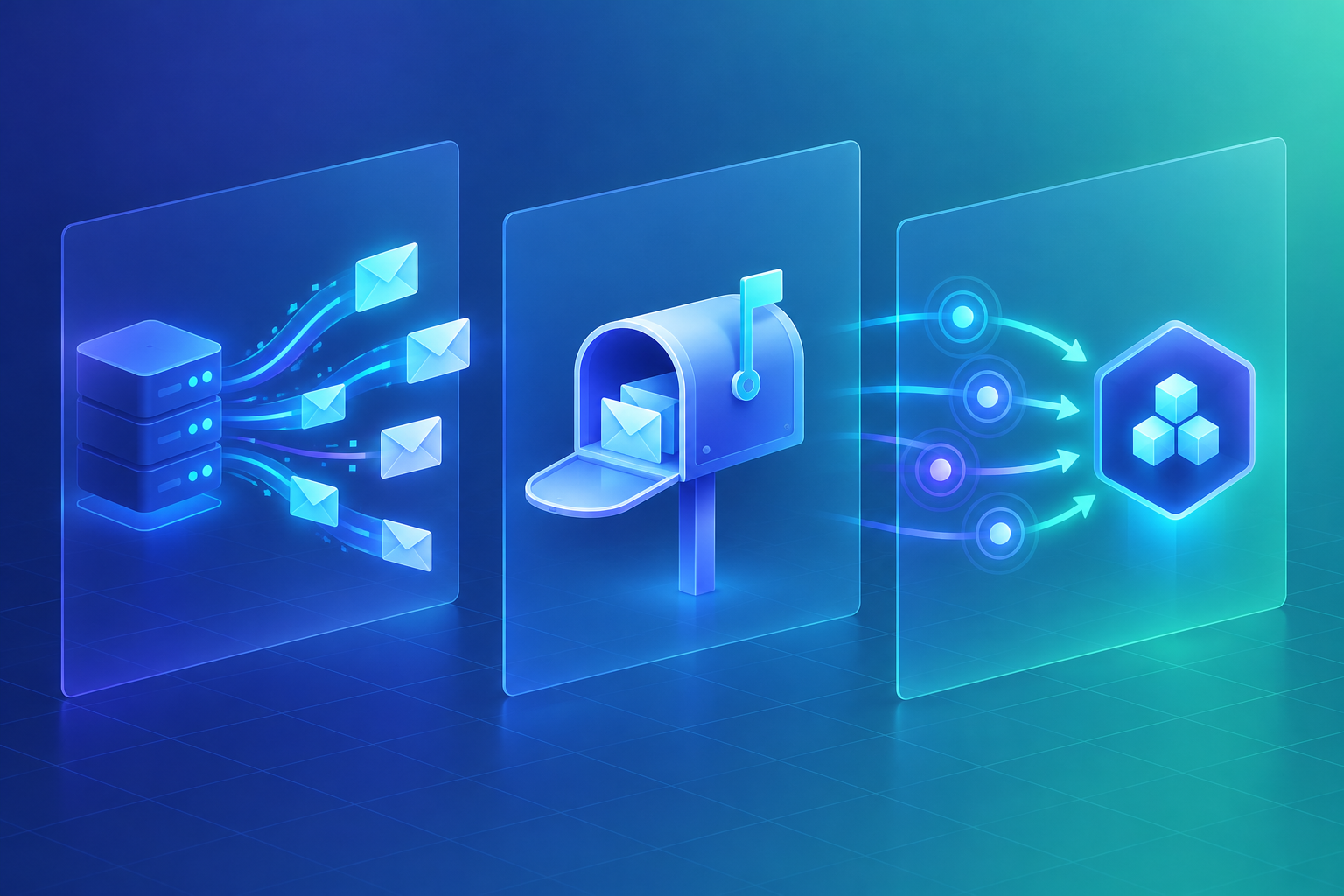
Why people search for a Resend alternative
"Resend alternative" is rarely a complaint about HTTP sending. Resend-class APIs made transactional email feel like any other REST call: verify a domain, POST JSON, get a message id, and move on. That model is why so many SaaS and AI apps start there.
Teams search for alternatives when the product outgrows send-only infrastructure. Common triggers:
- You need
hello@yourdomain.comfor humans—support, founders, sales—not only for APIfromaddresses. - You want inbound mail in the same stack:
support@,reply+ticket-…@, or documents customers email in. - You are consolidating bills: one provider for API sends, webhooks, and domain mailboxes instead of stitching a send API to a separate mailbox or inbound product.
- You care about idempotent retries and signed delivery events without bolting on extra services.
None of that means Resend is "bad." It means the search intent is often "send API plus mailboxes and inbound," not "a different curl wrapper."
For a product-level side-by-side, see Rovela's Resend alternative page. This article walks the engineering decision: what Resend-class tools do well, when mailboxes and inbound matter, how Rovela maps those pieces with docs you can verify, and how that fits OTP and magic-link flows.
What Resend-class APIs do well
Resend sits in the same peer class as other modern transactional send APIs (including SendGrid-style HTTP APIs for teams that prefer REST over SMTP). The strengths of that class are real:
Plain HTTP sending
Authenticate with an API key, send from / to / subject / html or text, and get a queued message id. No SMTP library required. Rovela's send path is the same shape: POST https://api.rovela.dev/emails with a Bearer token—see the email API overview and quick start.
Domain authentication
SPF, DKIM, and DMARC alignment are table stakes. Receivers expect signed, aligned mail for OTP codes and passwordless links. Any serious alternative must keep that bar.
Delivery feedback and developer ergonomics
Bounces and complaints (plus opens/clicks when you need them) should arrive as events you can act on. Fast signup, clear DNS instructions, and an API that scripts or AI agents can call without a heavy SDK explain why "Resend alternative" queries stay high: people already like the style of integration; they are shopping for scope.
If your only job is outbound transactional mail, a send-focused API may be enough. The fork is everything that is still email but is not POST /emails.
When you also need mailboxes and inbound
Domain mailboxes are a product surface
API from addresses are not a working inbox. Teams still need shared addresses (support@, billing@), personal mailboxes on the company domain, and IMAP/SMTP so Outlook, Apple Mail, and phones work without a second vendor. When the send API and the mailbox provider disagree on DNS—especially MX and return-path—you debug "API mail delivers but nobody can reply to hello@." Searching for a Resend alternative often starts the day someone asks for webmail on the same domain you authenticated for sending.
Inbound turns email into an application input
Outbound-only stacks force a second system when you need customer replies on tickets, per-conversation addresses (reply+ticket-381@…), "email us this PDF" workflows, or support loops that must hit your app. That is inbound as webhook + API fetch, not "someone checks Gmail sometimes." If those flows are on the roadmap, evaluate inbound before you deepen lock-in on a send-only vendor.
One bill, one reputation story
Splitting send and receive can work, but you maintain two DNS stories and two places to debug DMARC. Consolidation is a legitimate reason to re-evaluate—especially for small teams and AI-built MVPs.
How Rovela maps (send API, webmail/SMTP, inbound)
Rovela's positioning on the homepage and Resend alternative page is transactional send plus business mailboxes plus inbound, with webhooks and idempotency in the same product. Docs-backed map:
1. Send API
- Endpoint:
POST https://api.rovela.dev/emails - Auth:
Authorization: Bearer re_…(authentication, quick start) - Body: at least
from,to,subject, andhtmlortext - Response: a message
id;200means queued, not inbox placement—confirm withGET /emails/:id, events, or webhooks - Idempotency: an
Idempotency-Keyheader; a retry within 24 hours returns the original response without a duplicate send (email API)
curl -X POST https://api.rovela.dev/emails \
  -H "Authorization: Bearer re_your_api_key" \
  -H "Content-Type: application/json" \
  -H "Idempotency-Key: signup-otp-user_123-2026-11-04" \
  -d '{
    "from": "Acme <hello@mail.yourdomain.com>",
    "to": "user@example.com",
    "subject": "Your verification code",
    "html": "<p>Your code is <strong>482931</strong>. It expires in 10 minutes.</p>",
    "text": "Your code is 482931. It expires in 10 minutes."
  }'
2. Business mailboxes, webmail, and SMTP
Domain mailboxes are included alongside the API; plan limits live on Pricing—check that page rather than hard-coding numbers into your architecture notes.
- Webmail: browser access at rovela.email, documented in the webmail manual (inbox, compose, folders, search, shared mailboxes, IMAP import).
- SMTP for mail apps: host
mx.rovela.dev, port 465 with SSL/TLS; username = full address; password = per-device credential (SMTP settings). Use the HTTP API for programmatic volume; SMTP is for clients and human send. A mailbox can send only as itself, DKIM-signed with your domain key.
3. Inbound webhooks
Documented in Receiving email:
- Enable inbound on a verified domain (
POST /domains/<domain_id>/inbound) with afull_accesskey; publish the returned MX record. - Optionally restrict recipients when
catch_allis false. - Subscribe to
email.received. - Verify the signature, then
GET /inbound/:idfortext/html(the event carries envelope metadata, not the full body).
Treat inbound HTML as untrusted. Keep sending_access keys in app runtimes; keep full_access keys on servers that manage domains and fetch inbound bodies. Delivery and inbound events use signed POSTs with retries (webhooks overview); deduplicate on event id.
Choosing for AI/SaaS auth emails (OTP and links)
Most teams comparing Resend alternatives still spend most volume on account email: verification codes, magic login links, invites, and password resets. Those flows are almost always outbound POST /emails plus your token store. Provider choice still matters because auth mail must be DKIM-signed from a domain you control, should include both html and text, needs idempotent retries, and should avoid click-tracking rewrites on security URLs.
Rovela documents OTP and reset patterns here:
Application-side patterns (token in your DB; Rovela only delivers) on the blog:
- Transactional email for AI apps
- Magic login email links
- Team invite email links
- Email verification links
- Sending OTP codes by email
Mailboxes and inbound still help auth products when humans answer security@ / support@ or handle abuse reports—not on the OTP code path itself. Prefer a stack that does not force a second vendor the week those human channels appear.
Migration mindset (similar API shape, not a drop-in SDK)
Migrating from a Resend-class send API is usually a small send-path change plus a larger decision about mailboxes and MX.
- Inventory sends (OTP, invites, receipts). Keep copy; change transport.
- Verify the domain on Rovela and publish the dashboard DNS records. Unverified domains are refused (quick start).
- Swap endpoint and key to
https://api.rovela.dev/emails. Fields likefrom,to,subject,html/textwill look familiar, but do not assume a 1:1 SDK or identical optional fields—diff against live docs for attachments, templates, scheduling, and batch. - Add
Idempotency-Keyon auth sends. - Wire webhooks for bounces/complaints (and
email.receivedif you use inbound). Verify signatures; return2xxquickly. - Mailboxes second, then MX for inbound only when you are ready—MX changes affect all mail to that hostname.
- Cut traffic gradually until message status and webhooks look healthy.
Many teams reach a first send quickly when DNS is already under their control (alternatives/resend); mailbox and MX cutovers need a longer checklist. Treat HTTP JSON as the contract, not an SDK parity claim.
Next steps
- Resend alternative — mailboxes and inbound
- Quick start · Email API
- Inbound: Receiving email
- Human inboxes: Webmail manual · SMTP
- Limits and what every plan includes: Pricing
Bottom line: a Resend alternative search often means send-only was the right MVP, and mailboxes plus inbound are the next production requirement. Rovela covers HTTP transactional send, domain mailboxes with webmail/SMTP, and inbound webhooks in one stack. Verify claims against the docs above, then ship the auth emails your AI or SaaS app already depends on.